ABOUT
We’re a UK technology start-up that has a patented non-hazardous, non‑amine solvent that delivers low‑energy CO₂ capture with exceptional tolerance to impurities.
Our technology and its performance have now been proven on a fully integrated full process demonstration unit at Veolia’s Energy Recovery Facility in Sheffield.
TECHNOLOGY
Our technology has significant benefits over incumbent technologies


Non-hazardous, environmentally benign, low-corrosion solvent
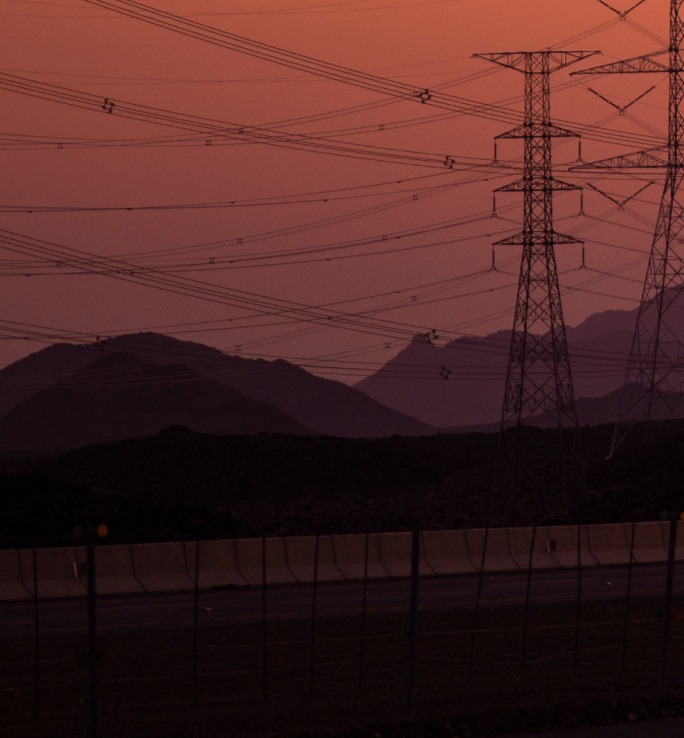

Significantly lower energy consumption


A robust chemistry that can target harder-to-abate sectors (low degradation)
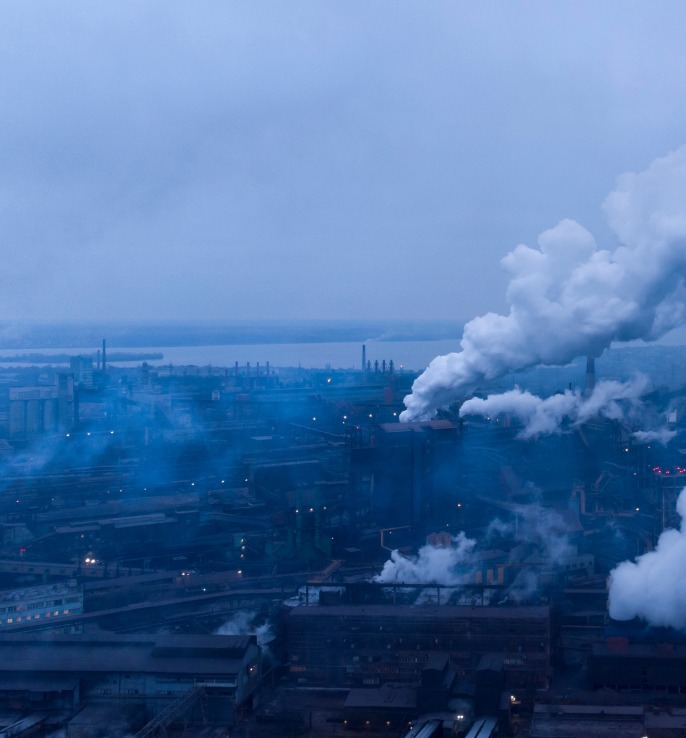

Reduced cost of capture
Lower energy demand
The technology requires significantly less regeneration energy, reducing steam consumption and parasitic load while protecting plant efficiency and output.
Robust industrial performance
The solvent is engineered to operate reliably in harsh industrial conditions, tolerating SOx, NOx, particulates, and fluctuating flue‑gas compositions without loss of performance.
Low degradation and makeup rates
Exceptional solvent stability reduces degradation, solvent loss, and replacement frequency, lowering operating costs and maintenance intervention.
Easier permitting and environmental profile
A non-hazardous, biodegradable solvent with environmentally benign degradation products simplifies permitting and supports compliance with increasingly strict environmental regulations.
Reduced compression requirements
CO₂ is released at higher pressure than conventional systems, cutting downstream compression energy and balance‑of‑plant costs.
Lower corrosion and materials cost
Reduced corrosivity enables simpler equipment design, broader materials selection, and lower capital and long‑term maintenance costs.
PILOT PLANT DEMONSTRATION
C-Capture’s fully integrated, full-process carbon capture demonstration unit, which operates above 1 tonne of CO2 per day has been designed to eliminate all the foreseeable scale-up risks ahead of a commercial deployment.
- Scale: Fully integrated, full‑process demonstration at 1–2 tpd CO₂
- Operating history: >3,000 hours on air & CO₂ and >1,500 hours on EfW flue gas
- Purpose: Specifically designed to remove or reduce all scale‑up risks
- Design basis: Scaled‑down commercial engineering design (not scaled‑up lab equipment)
- Process scope: Includes all commercial process units and complete solvent recycles
- Controls: Full commercial plant control system
- Operability proven: Start‑up, shut‑down, stand‑by, recovery, and emergency routines developed and validated
- Real flue gas operation: Relocated October 2025 to Veolia ERF, Sheffield and 1,000 continuous hours of operation demonstrating commercial conditions delivered in April 2026
- Outcome: Unequivocal proof of process and solvent performance and robustness, building on prior CCSCU demonstrations
CCSCUs – CARBON CAPTURE SOLVENT COMPATIBILITY UNITS
Proven across UK glass, waste‑to‑energy, BECCS, cement and lime applications.
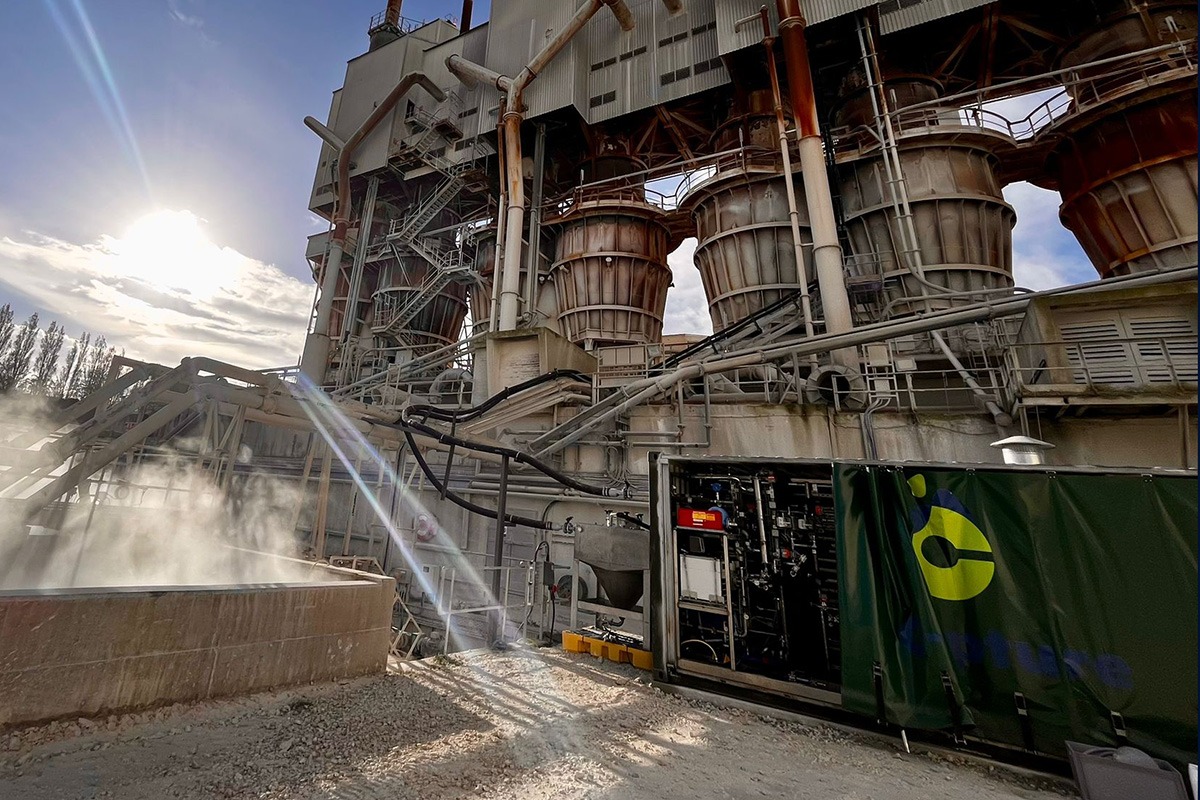
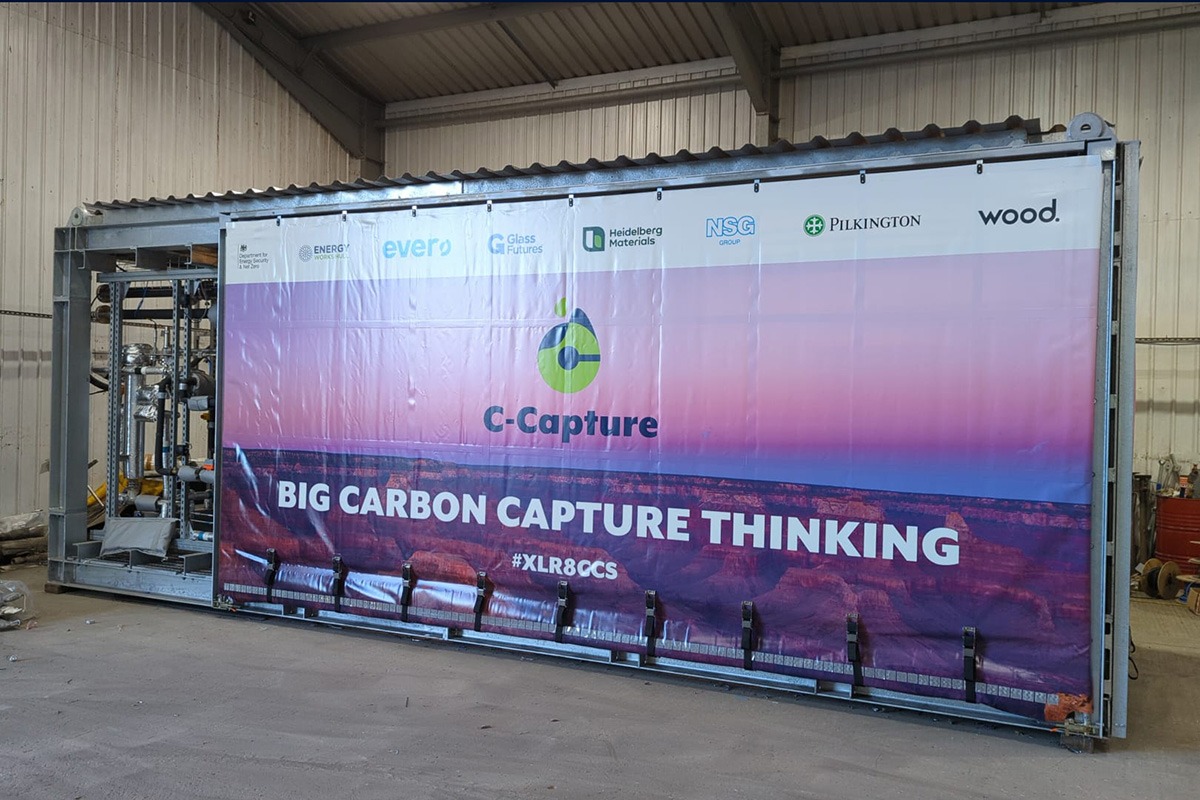
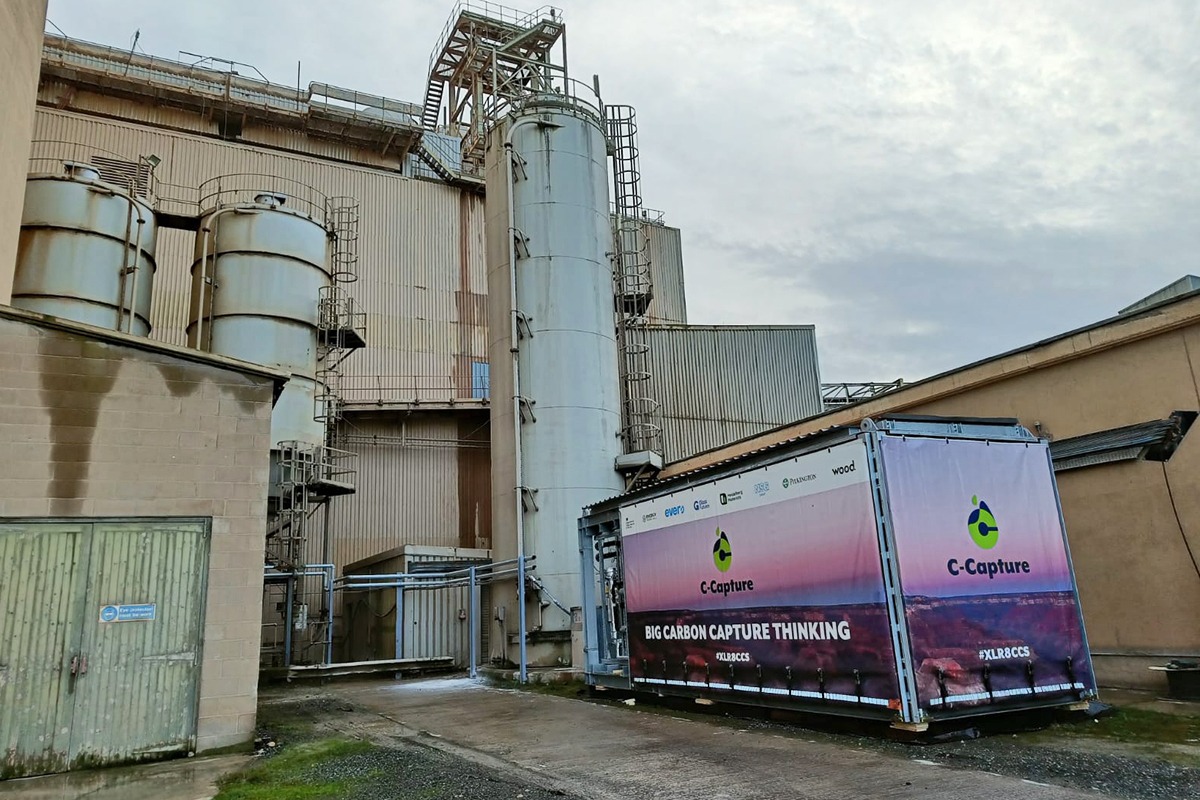
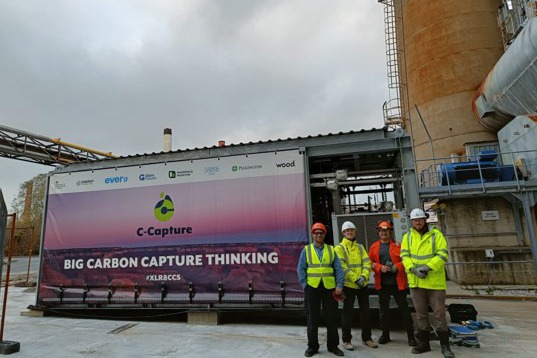
C‑Capture has designed, built, and deployed four Carbon Capture Solvent Compatibility Units (CCSCUs) as part of its structured technology de‑risking programme. These CCSCUs have been operated on real flue gas from glass, waste‑to‑energy, BECCS and lime facilities in the UK, providing early validation across a diverse range of hard‑to‑abate industrial environments.
Each CCSCU is a containerised carbon capture plant operating a full absorption and stripping cycle, enabling realistic evaluation of solvent behaviour under industrial operating conditions. The units are instrumented to quantify solvent loss and degradation at a high level for specific flue‑gas compositions, with the explicit objective of demonstrating that C‑Capture’s non‑amine solvent is robust to prolonged, continuous exposure to flue gas and to the thermal regeneration cycle of the C‑Capture process.
TECHNO-ECONOMIC ANALYSIS
AECOM study by BEIS to estimate potential of amines technology
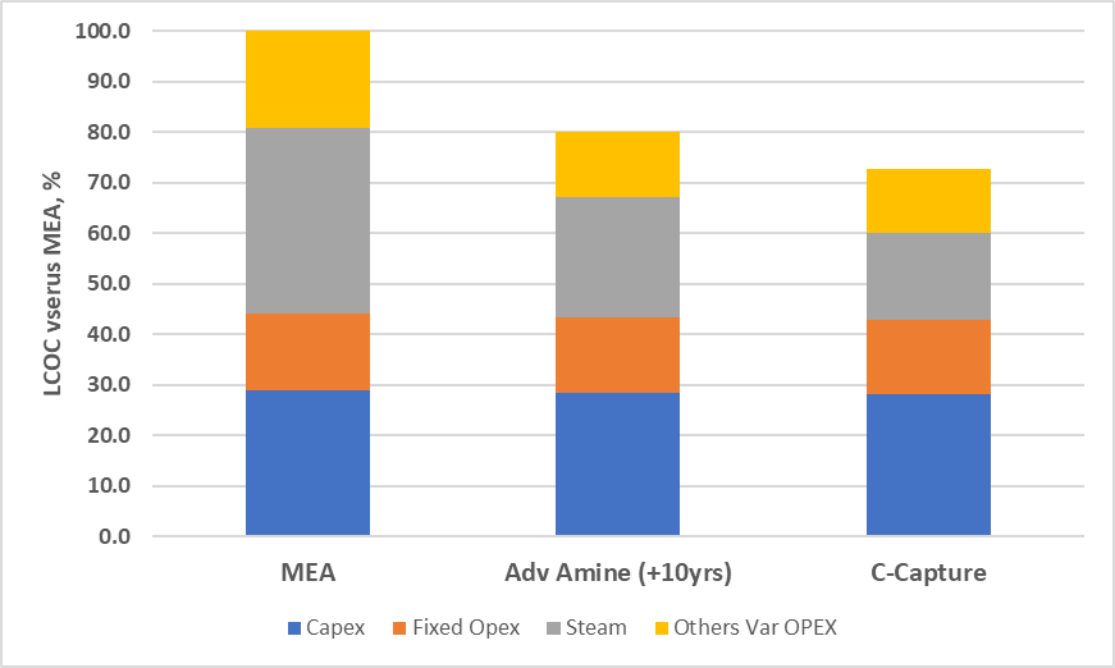
Accurate like-for-like comparisons for different technologies are time consuming and expensive as they need to be site specific, understanding local restrictions and advantages. The closest independent and published study is an AECOM study commissioned by BEIS (now DESNZ) in 2022. This study showed C-Capture was significantly better than standard amines, and already better where it estimated advanced amines “might” get to in 10 years of development. Worth remembering, this was against C-Capture’s generation 1.0 data.
Below is a summary of our internal comparison vs. standard MEA and advanced amines (CESAR 1). There are two sets of benchmarking costs, focused ISBL and “Whole Project” that includes moderate compression – required for liquefaction or injection into a pipeline.
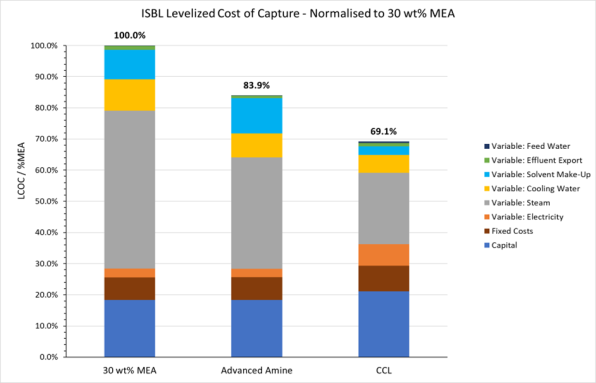
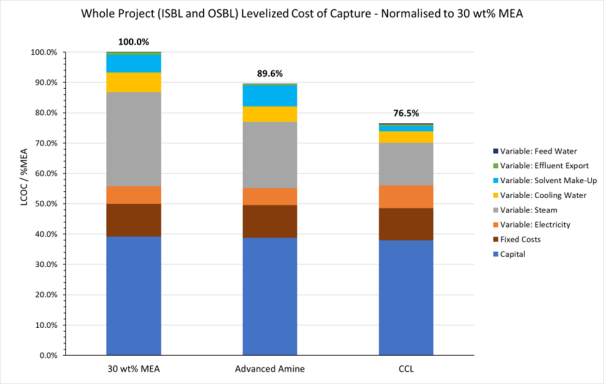
The robustness and lower energy are clearly evident. In a very narrow “ISBL” view, C-Capture’s process does require slightly more electricity and has a slightly higher capital; however, when compression costs are added, these become very similar; however, the energy saving and the robustness of the solvent remain.
It is worth adding, these are economic upsides; the fact that C-Capture’s solvent is not hazardous and does not contain amines (or any nitrogen molecules) means the creation and therefore emission of highly toxic and problematic nitrosamine and nitramines is not possible!